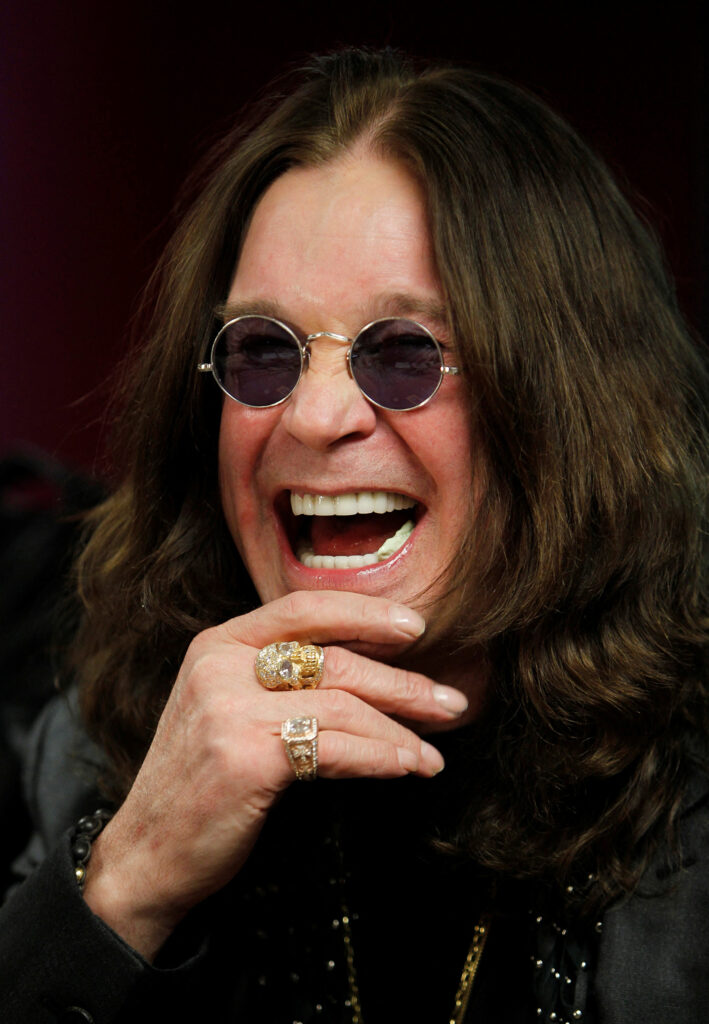
Ozzy Osbourne: The Prince of Darkness Who Gave the World a Lifetime of Light
From the factories and terraced streets of Birmingham to Black Sabbath, solo superstardom, family television and one final extraordinary homecoming, Ozzy Osbourne lived a life that often sounded impossible even when he was the one telling the story. This is not the story of how Ozzy Osbourne died. It is the story of how John Michael Osbourne lived.
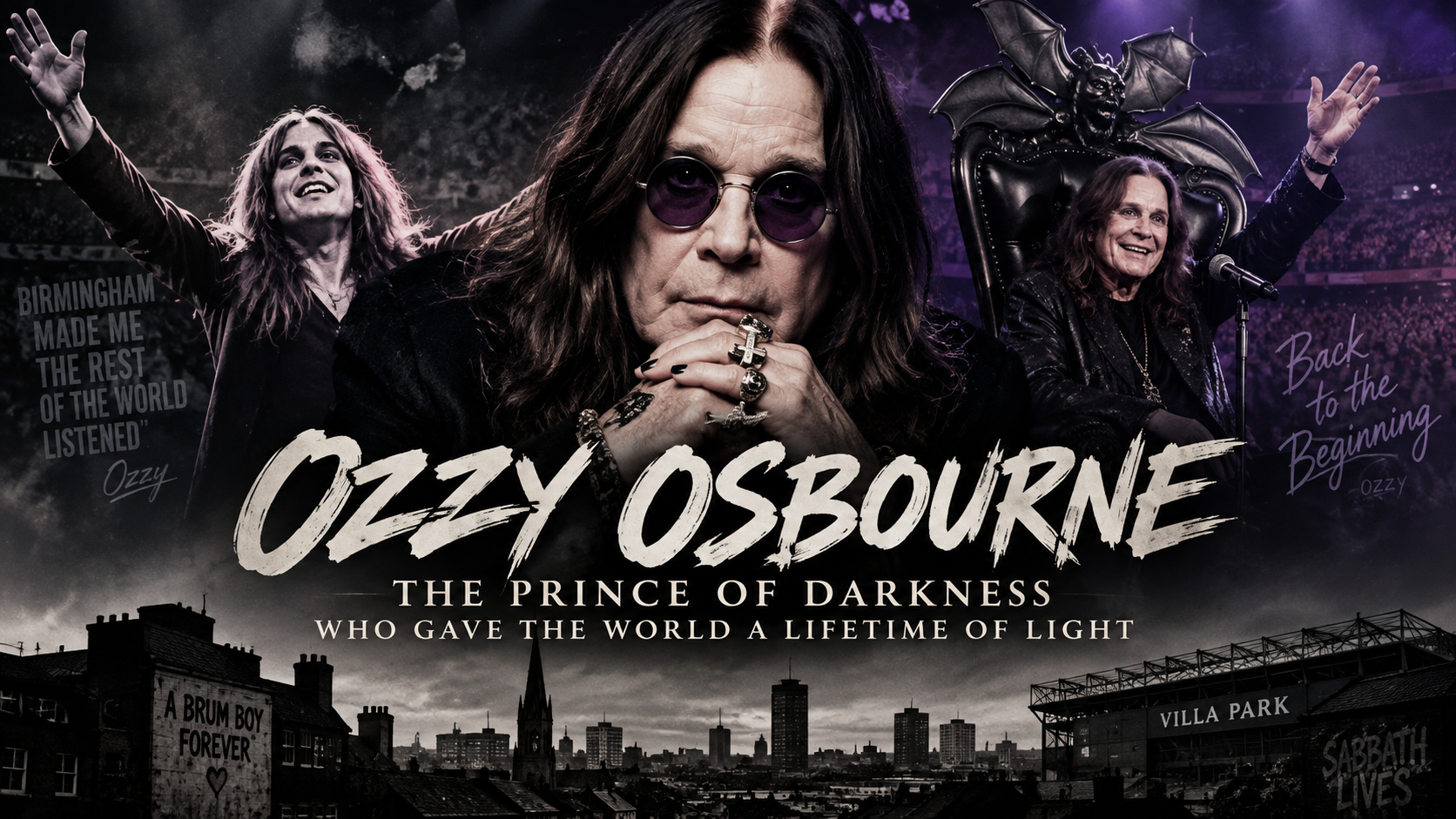
Seventeen days.
In the end, that was the distance between Ozzy Osbourne's final bow and his goodbye.
On 5 July 2025, tens of thousands of people packed into Villa Park in Birmingham to watch something many thought they would never see again. Ozzy was back in the city where it had all begun, performing one final time before the people who had followed him for more than half a century.
His body could no longer do what it once had. Years of illness and physical setbacks meant that the man who had spent decades charging around stages could no longer stand and perform as he once had.
So Ozzy did it sitting down.
And somehow, that made the moment even bigger.
There he was, dressed in black, seated on a throne beneath the lights, that unmistakable voice still belonging to the kid from Birmingham who had somehow become one of the most recognisable figures in popular music history.
Then came Black Sabbath.
Tony Iommi.
Geezer Butler.
Bill Ward.
Ozzy Osbourne.
The original four, together again in Birmingham for the first time onstage in more than two decades, bringing one of music's most extraordinary stories back to the place where it started.
Nobody inside Villa Park could have known just how final the farewell would become.
Ozzy died on 22 July 2025, surrounded by his family, according to the statement announcing his death. He was 76.
But reducing Ozzy Osbourne’s life to its final 17 days would miss almost everything that made that life remarkable.
Because before the Prince of Darkness, before the bats and the headlines, before the reality television cameras and the sunglasses, before Crazy Train, Ozzfest and arenas filled with people screaming his name, there was John Michael Osbourne.
A working-class kid from Birmingham who had absolutely no obvious reason to believe the world would one day know who he was.
It did.
And it never forgot him.
John Michael Osbourne Wasn't Supposed to Become a Rock Star
Long before anybody called him the Prince of Darkness, Ozzy Osbourne was John Michael Osbourne, a working-class boy growing up in Aston, Birmingham.
The surroundings mattered.
Birmingham wasn't Los Angeles. It wasn't swinging London. It was an industrial city of factories, smoke, machinery and working families. The young men who would eventually form Black Sabbath didn't emerge from some glamorous artistic scene. They came from an environment in which heavy industry was part of everyday life.
Ozzy's early employment included jobs far removed from a recording studio. The Rock & Roll Hall of Fame's account of his life lists work including plumbing, tuning car horns and employment in a slaughterhouse.
Music offered something different.
And one band in particular showed him what might be possible.
The Beatles.
For all the demonic imagery later attached to Ozzy, one foundation of his music was an obsession with melody. The Rock Hall's retrospective notes how his Beatles-obsessed childhood shaped the songwriting instincts that later appeared throughout his career.
That contrast would eventually become part of Ozzy's magic.
The imagery could be dark.
The guitars could sound enormous.
The subject matter could terrify parents.
But underneath it all, Ozzy understood a tune.
Before any of that could matter, though, he needed a band.
And Birmingham was about to produce one that would change popular music.
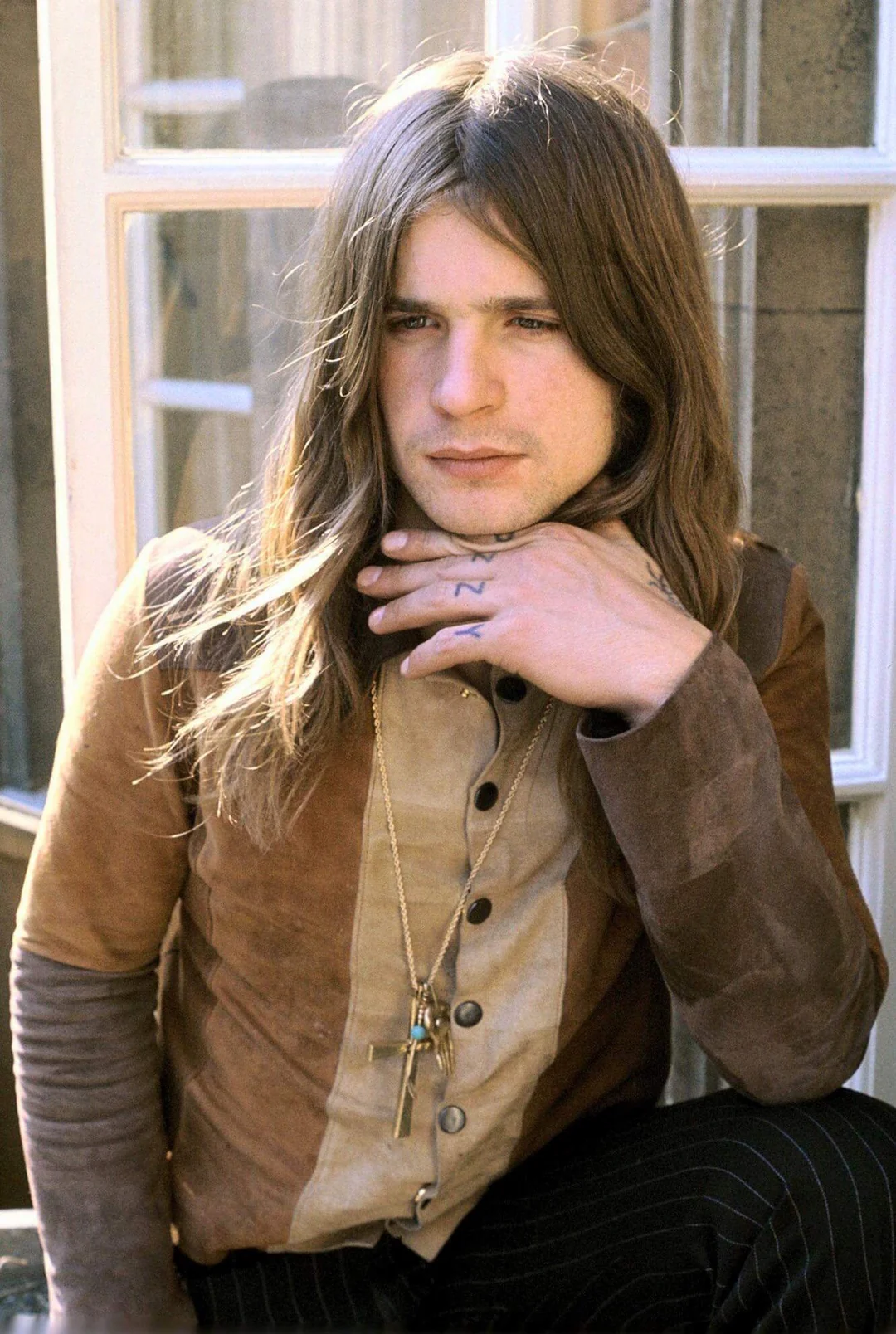
Then Black Sabbath Changed the Sound of Rock Music
Ozzy Osbourne, Tony Iommi, Geezer Butler and Bill Ward did not set out knowing they were going to help define an entirely new genre.
But listen to those early Black Sabbath records now and it is difficult to imagine heavy metal developing in quite the same way without them.
The band's self-titled debut arrived in 1970. Paranoid followed the same year.
The Rock & Roll Hall of Fame describes Black Sabbath as the band that delivered heavy metal into the world, combining their different influences into a form of relentless hard rock filled with darkness, unease and the social disillusionment surrounding them.
Tony Iommi's riffs were colossal.
Geezer Butler’s bass and lyrics gave the music weight and menace.
Bill Ward's drumming could swing as much as it could pulverise.
And above everything sat that voice.
Ozzy did not sound like the polished rock singers who would follow him. His voice was strange, urgent and immediately identifiable. He often seemed to follow Iommi's guitar melodies rather than float conventionally above them, making the vocal feel welded to the riff.
Black Sabbath.
Paranoid.
War Pigs.
Iron Man.
Children of the Grave.
Songs that became part of heavy music's basic vocabulary.
The band were eventually inducted into the Rock & Roll Hall of Fame in 2006.
Yet success did not make Black Sabbath stable.
As the decade progressed, drugs, alcohol, exhaustion, money disputes and deteriorating relationships took their toll. The excess surrounding the group became increasingly difficult to separate from the music.
By 1979, Ozzy was out.
For many musicians, losing the band that made them famous would have been the end of the story.
For Ozzy Osbourne, somehow, it was barely the halfway point.
Ozzy Lost Black Sabbath — Then Built Another Career Almost as Big
One version of Ozzy Osbourne's story ends in 1979.
He had lost his band. His addictions were severe. Black Sabbath continued without him.
Instead, the next chapter produced one of rock music's great second acts.
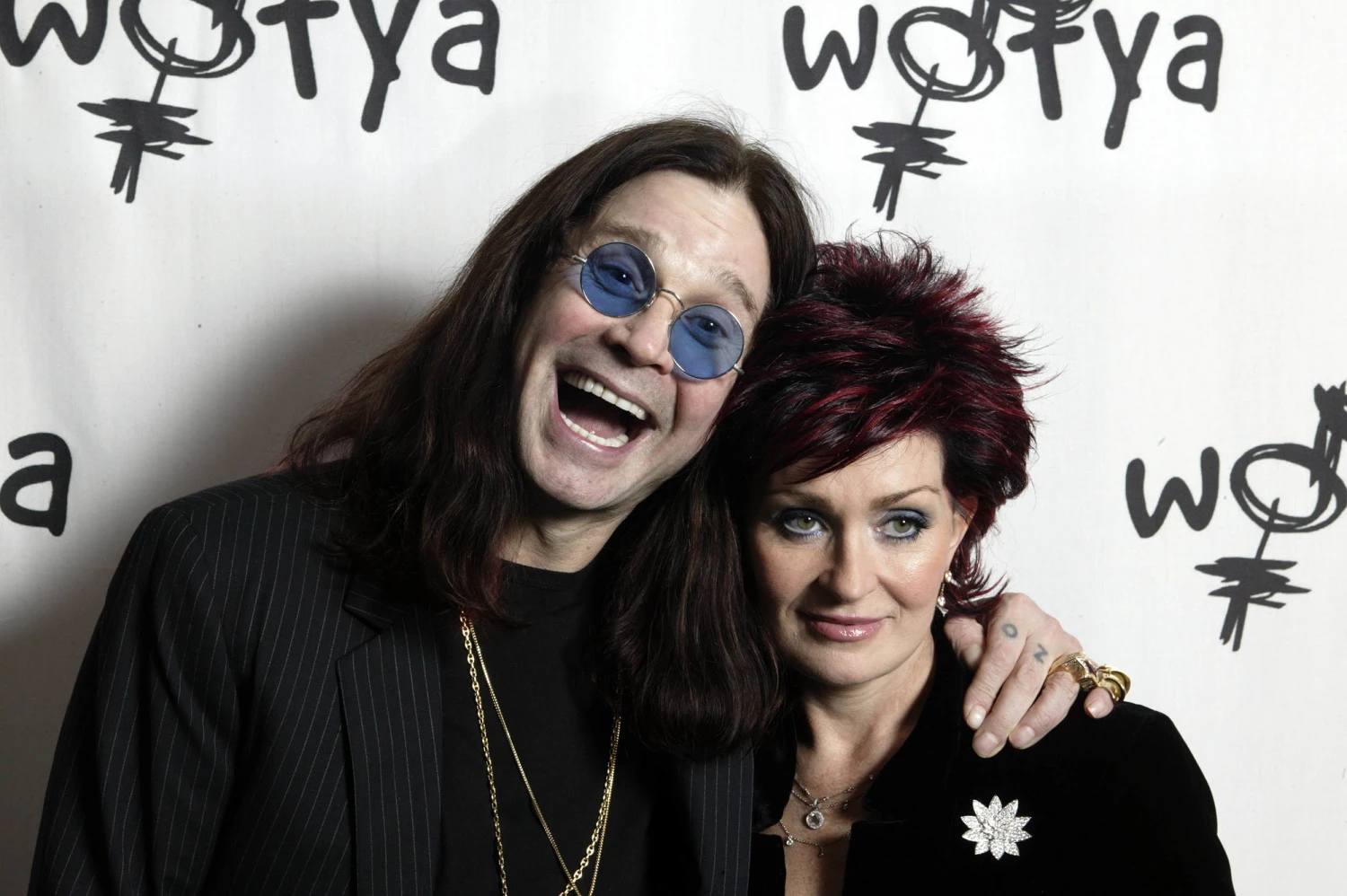
Central to it was Sharon Arden, later Sharon Osbourne.
Sharon became his manager, eventually his wife, and a defining figure in both his professional and personal life.
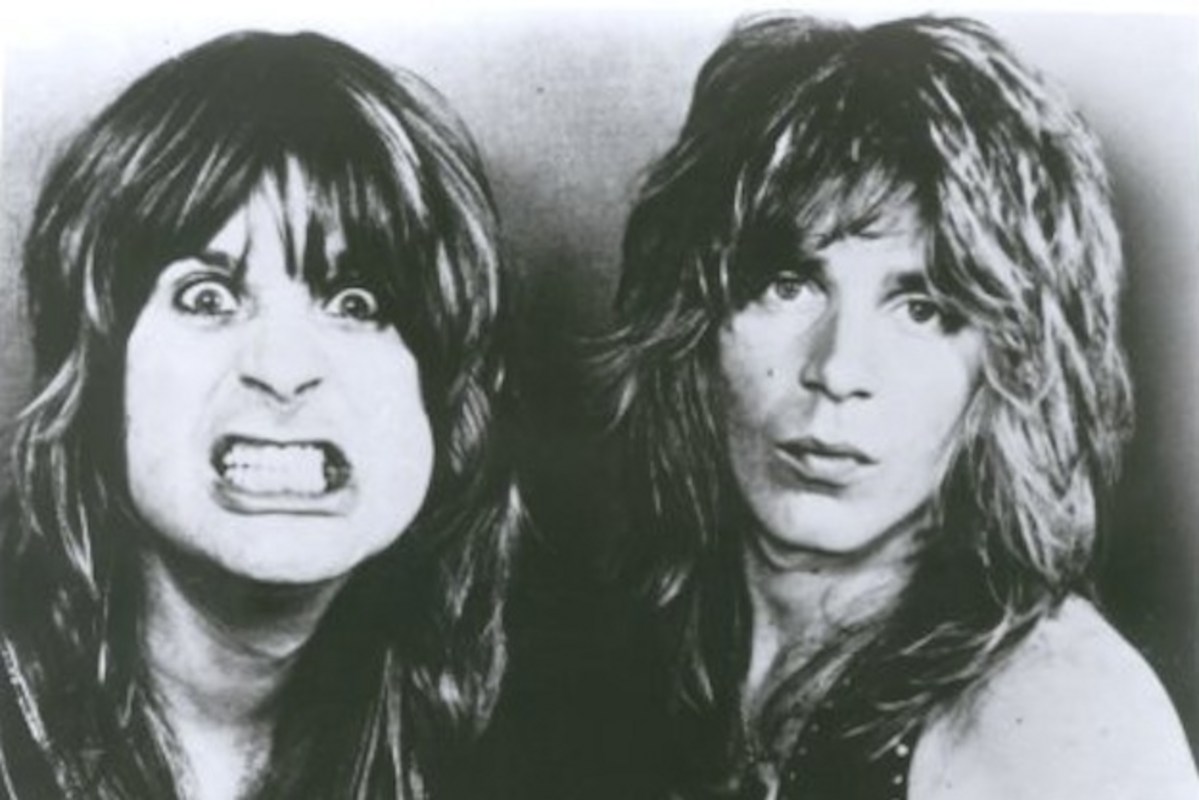
Then there was Randy Rhoads.
The young American guitarist gave Ozzy's new music a completely different vocabulary. Rhoads could produce crushing riffs, but his playing also drew from classical music, bringing precision and elegance into songs that remained unmistakably heavy.
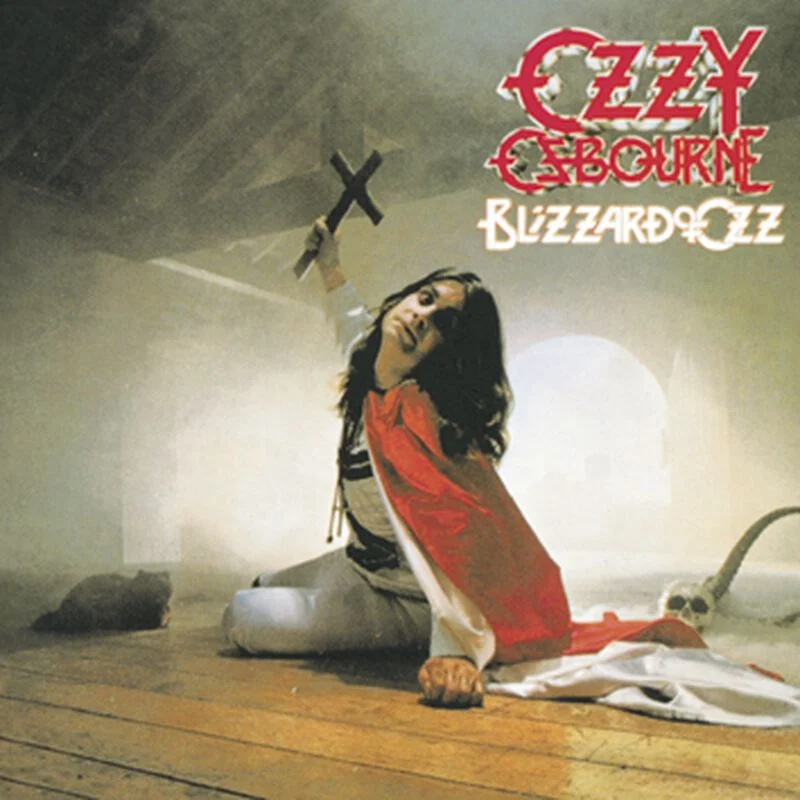
The result was Blizzard of Ozz.
Released in 1980, the album gave Ozzy a new identity almost immediately.
Crazy Train.
Mr. Crowley.
I Don't Know.
Rather than sounding like a singer attempting to recreate his old band, Ozzy suddenly sounded contemporary again.
The Rock Hall credits Blizzard of Ozz and its follow-up, Diary of a Madman, with helping Ozzy reinvent heavy metal for the 1980s. It describes his solo work as broadening metal's vocabulary through melody, synthesisers, acoustic textures, power ballads and the virtuosity of guitarists including Rhoads and, later, Zakk Wylde.
Blizzard of Ozz ultimately spent two years on Billboard's album chart and sold five million copies in the United States, according to the Rock Hall's 2024 induction essay.
Ozzy hadn't simply survived being fired from Black Sabbath.
He had become a star all over again.
The Partnership That Ended Far Too Soon
Randy Rhoads died at just 25.
On 19 March 1982, during the Diary of a Madman tour, Rhoads was aboard a small aircraft that crashed after clipping the band's tour bus. Three people were killed. Ozzy and Sharon were sleeping inside the bus and escaped the accident.
For Ozzy, the loss was devastating.
The musical partnership had lasted only a short time, yet its influence stretched across the rest of his career.
Rhoads had helped prove that Ozzy outside Black Sabbath wasn't a nostalgia act or a temporary curiosity. This was something new.
Ozzy continued.
Jake E. Lee later played on Bark at the Moon and The Ultimate Sin. Zakk Wylde arrived in the late 1980s and became another guitarist whose career would be permanently associated with Ozzy's.
But Randy's shadow never really disappeared.
The 1987 live album Tribute, credited to Ozzy Osbourne and Randy Rhoads, ensured that another generation heard what the two had created together.
Ozzy's career would contain plenty of outrageous stories.
This was one of the chapters that reminded everyone there was a human being underneath them.
Somewhere Along the Way, Ozzy Osbourne Became Larger Than Life
Then there are the stories.
The bat.
The dove.
The Alamo.
The substances.
The hotel rooms.
The incidents that became rock folklore, repeated so often that eventually the mythology threatened to consume the musician.
Some of those stories were true. Some grew larger with every retelling. Ozzy himself was often the funniest person to recount them.
The infamous bat incident happened in Des Moines in 1982, when Ozzy bit the head off what he believed was a fake bat thrown onto the stage. It wasn't fake.
It became perhaps the single most famous image attached to his career.
But telling Ozzy's story entirely through outrageous anecdotes has a problem.
You lose the music.
A man does not remain an arena attraction for decades because he once did something ridiculous with a bat.
Songs do that.
Albums do that.
Connection with an audience does that.
Ozzy possessed something far more difficult to manufacture than controversy: people liked him.
The terrifying Prince of Darkness could be remarkably funny. He could laugh at himself. The persona and the person frequently contradicted each other.
That contradiction became increasingly important as the world got to know him.
Behind One of Rock's Wildest Careers Was an Extraordinary Partnership
You cannot tell Ozzy's story without Sharon.
Manager.
Wife.
Mother of three of his children.
Business partner.
The person beside him through some of the highest and lowest moments of his life.
Their relationship was complicated and at times turbulent, and both spoke publicly over the years about extremely difficult periods in their marriage. Sanitising those years would make the story less truthful.
But so would pretending the relationship was only its worst moments.
Sharon played a major role in building Ozzy's solo career after Black Sabbath. Together they later created Ozzfest, which the Rock & Roll Hall of Fame describes as the most successful metal festival ever.
Their lives became intertwined with Ozzy’s public identity to a degree rarely seen in rock music.
Eventually, the rest of the world would meet the family too.
And it would transform Ozzy yet again.
The Prince of Darkness Became America's Favourite Confused Dad
By the beginning of the 2000s, Ozzy Osbourne had already lived enough lives for several careers.
Then MTV put cameras inside his house.
The Osbournes premiered in 2002 and revealed something that decades of frightening imagery never could.
Ozzy Osbourne was hilarious doing absolutely nothing.
The man once presented as a threat to civilisation could be seen shuffling around his home, arguing with remote controls, mumbling at his family and trying to understand what was happening around him.
Sharon was there.
Kelly was there.
Jack was there.
The dogs were everywhere.
And suddenly millions of people who might never have bought a Black Sabbath album knew Ozzy.
The Rock Hall credits his reality television career with introducing millions more people to the world of metal.
It could easily have destroyed his credibility.
Instead, it exposed something audiences had perhaps sensed all along.
Ozzy was weird.
But he was also warm.
Funny.
Vulnerable.
And unmistakably human.
The Prince of Darkness had somehow become a sitcom father without ceasing to be the Prince of Darkness.
Very few performers could have survived that transformation.
Ozzy made it another chapter.
Every Time the World Thought He Was Finished, He Came Back
Ozzy’s career became a succession of supposed endings that weren’t endings.
There were farewell tours.
There were reunions.
There were health problems.
There were years when another major performance seemed increasingly unlikely.
And still he returned.
Black Sabbath eventually embarked on The End, a farewell tour that concluded back in Birmingham in 2017. The official concert film captured Ozzy, Tony Iommi, and Geezer Butler performing songs including War Pigs, Iron Man, and Paranoid in the city where the band began.
His solo legacy received another enormous acknowledgement in 2024 when Ozzy was inducted into the Rock & Roll Hall of Fame as a solo artist, after entering with Black Sabbath in 2006.
Two inductions.
Two extraordinary careers.
One voice connecting them.
By then, however, performing had become much more difficult.
Ozzy had publicly revealed his Parkinson’s diagnosis in 2020 and faced a series of serious physical setbacks.
The question became whether he would ever get the goodbye he wanted.
He wanted Birmingham.
He wanted the fans.
And somehow, one more time, Ozzy got there.
One Last Ride Home to Birmingham
The title could not have been more appropriate.
Back to the Beginning.
On 5 July 2025, Villa Park became the centre of the heavy-metal world.
Artists influenced by Ozzy and Black Sabbath gathered in Birmingham for an enormous farewell event. But everything ultimately pointed to one man.
Ozzy.
Unable to perform standing, he appeared seated on a throne.
It didn't matter.
The crowd supplied whatever physical energy he could no longer give them.
Then the story completed its circle.
Ozzy Osbourne.
Tony Iommi.
Geezer Butler.
Bill Ward.
The original Black Sabbath lineup performed together for the first time in more than 20 years.
Not in Los Angeles.
Not in New York.
Birmingham.
Home.
The kid from Aston who once worked ordinary jobs in an industrial city had returned as one of the people who helped change the sound of modern music.
Carefully manufactured farewell tours are designed to wring one more round of ticket sales from a famous name.
This didn't feel like that.
It felt like gratitude.
Ozzy had spent decades receiving noise from his audience.
That night, Birmingham gave it all back.
Nobody Knew Just How Final the Goodbye Would Be
Seventeen days after Villa Park, Ozzy Osbourne died.
His family announced his death on 22 July 2025, saying he had been surrounded by love and with his family. He was 76.
There was immediate grief.
But the timing of that final performance was also unusually comforting.
He made it.
After everything his body had been through, after cancellations and uncertainty over whether he would ever perform a full farewell, Ozzy reached Birmingham.
He saw the crowd.
He heard them.
He performed his songs.
He played with Black Sabbath.
He said goodbye.
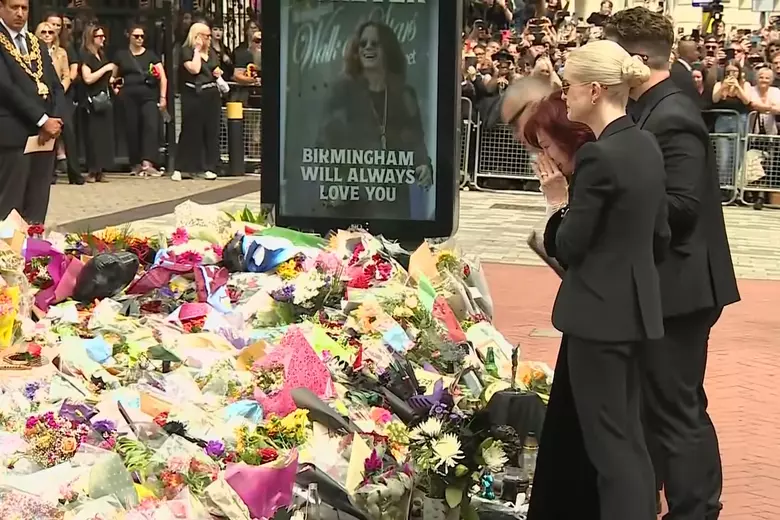
When Birmingham later gathered to honour him, thousands lined the streets. His funeral procession stopped at the Black Sabbath bench, where Sharon and family members acknowledged the flowers and tributes left by fans.
The city that helped create Ozzy Osbourne had welcomed him home twice in the space of a month.
Once as a rock star.
Once as one of its own.
Ozzy's Greatest Trick Was Never Becoming a Museum Piece
Ozzy's influence can be measured in bands.
It can be measured in albums.
It can be measured in millions of records.
The Rock Hall's 2024 essay estimated that by 2020 his solo work represented 51 million album sales and streaming equivalents, with his combined Black Sabbath and solo output surpassing 115 million units.
But numbers aren't really enough.
Heavy metal changed around Ozzy repeatedly, and somehow he kept finding a place inside it.
The Sabbath records influenced generations of bands.
His early solo albums helped define another era.
Ozzfest provided a stage for established and emerging metal acts.
The Osbournes turned him into a different kind of global celebrity.
Later collaborations connected him with listeners who hadn't been alive when Paranoid was recorded.
And in 2024, the Rock Hall inducted him for a second time, recognising a solo career substantial enough to stand on its own, separate from one of the most influential bands in rock history.
That is an astonishing achievement.
Ozzy never became merely "heritage".
He remained Ozzy.
In 2026, Ozzy Is Going Back to the Beginning One More Time
There is now another chapter.
On 16 September 2026, Mercury Studios and Trafalgar Releasing announced that Ozzy & Black Sabbath: Back to the Beginning will receive a worldwide cinema release beginning 28 October 2026.
The film captures Ozzy's final performance and the reunion of the original Black Sabbath lineup, alongside reflections from musicians they inspired and behind-the-scenes material from the event.
Tickets go on sale on 24 September 2026.
It means audiences who weren't at Villa Park will have the chance to experience that extraordinary day on a cinema screen.
There is something wonderfully appropriate about that.
Ozzy's last concert wasn't really about proving he could still be the wild man from the 1970s.
He couldn't be.
Nobody could.
It was about being there.
One last time.
The Prince of Darkness Gave the World an Awful Lot of Light
It is tempting to look at Ozzy Osbourne's life and wonder how on earth one person managed to fit all of it in.
Black Sabbath.
The solo career.
Randy Rhoads.
Sharon.
The controversies.
The addictions.
The recoveries.
The children.
Ozzfest.
The Osbournes.
The reunions.
The illnesses.
The comebacks.
And finally Birmingham.
Again and again, the public image suggested darkness.
Yet listen to the people who loved Ozzy and another picture appears.
Humour.
Affection.
Family.
Gratitude.
And an almost childlike amazement that this strange journey had happened to him at all.
Perhaps that is why people connected with him for so long.
Ozzy never seemed entirely removed from John Michael Osbourne, the Birmingham kid underneath the mythology.
Fame transformed his circumstances.
It never completely polished away where he came from.
And when there was finally almost nowhere left to go, he went home.
On 5 July 2025, surrounded by the music he helped create and the musicians whose lives it had changed, Ozzy Osbourne sat beneath the lights at Villa Park and listened to Birmingham roar his name.
For more than half a century, he had given audiences something to shout about.
This time, they were shouting for him.
The Prince of Darkness had made it back to the beginning.
And what a life he'd lived getting there.