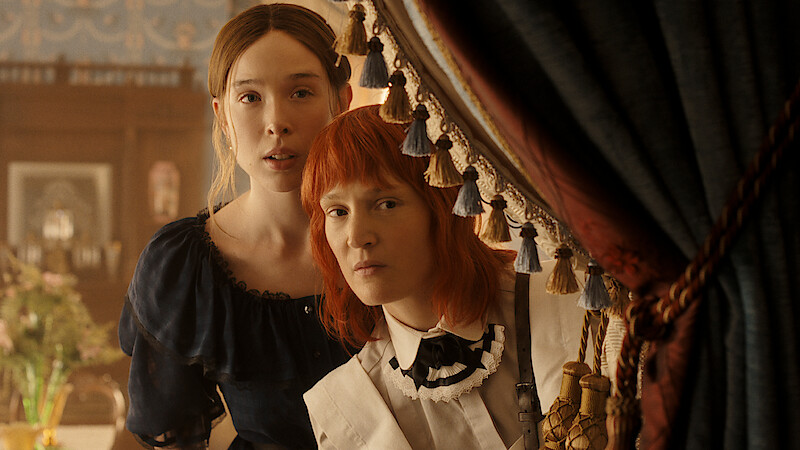
The Hollywood Reporter has published a negative review of Netflix’s Monster: The Lizzie Borden Story, the latest entry from Ryan Murphy and co‑creator/showrunner Ian Brennan. Starring Ella Beatty as Lizzie, with Rebecca Hall, Charlie Hunnam, Vicky Krieps and Sarah Paulson in supporting roles, the series retells the infamous 1892 axe murders. The outlet argues the show treats Lizzie’s guilt as settled, struggles to fill roughly eight hours of runtime, and resorts to knitting her story to those of Elizabetta Báthory and Aileen Wuornos in service of a broad, and — the review says — unconvincing feminist thesis.
Critical response
THR: a muddled, faux‑feminist take on a notorious case
The Hollywood Reporter’s review describes Monster: The Lizzie Borden Story as an attempt to extract meaning from the historical saga but ultimately calls the result “faux‑feminist nonsense.” The review asserts the series quickly assumes Lizzie’s guilt for the 1892 axe murders and then seeks to justify the act by portraying her parents as one‑dimensional antagonists. That critical verdict covers both the storytelling choices and the show’s bigger thesis: the critic takes issue with the programme’s insistence that a loose continuity of famous female killers constitutes a coherent statement about womanhood.
Series details
Cast and creative team behind the Netflix retelling
The Hollywood Reporter notes Ella Beatty headlines as Lizzie, joined by Rebecca Hall and Charlie Hunnam as her parents. Vicky Krieps appears as Maggie, a housemaid central to Lizzie’s transformation, and Krieps also plays Elizabetta Báthory in flashbacks. Sarah Paulson portrays Aileen Wuornos in sequences that the review says receive substantial screen time. The review also references Ryan Murphy as co‑creator and Ian Brennan as showrunner, and names Max Winkler as director of the series premiere.
Pacing and storytelling
Reviewer says show pads runtime with repetition and detours
According to The Hollywood Reporter, the series struggles to sustain its premise across roughly eight hours, resorting to repeated exposition and narrative detours that go nowhere. The review describes lines of explanation being restated in quick succession and character tangents that are raised but abandoned. It criticises the way the relationship between Lizzie and Maggie is staged, saying the show slows into pastoral, romantic tableaux that clumsily evoke other historical lesbian dramas without delivering the same emotional or sexual intensity.
Thematic choices
Linking Lizzie to Báthory and Wuornos fuels the review’s objections
The Hollywood Reporter takes particular issue with the series’ decision to braid Lizzie’s narrative with those of Elizabetta Báthory and Aileen Wuornos. The review argues the three killers share little in motive, method or outcome, and that the show’s attempt to present them as part of a single lineage of female violence feels forced. The critic also flags an abrupt reframing of Lizzie as an icon of the suffrage movement as an example of the series’ tendency to inflate its own significance. The review concludes that the show’s female‑centred casting does not by itself justify conflating disparate lives into a single cultural argument, quipping that, in the programme’s hands, the takeaway is essentially, “Women be choppin’.”